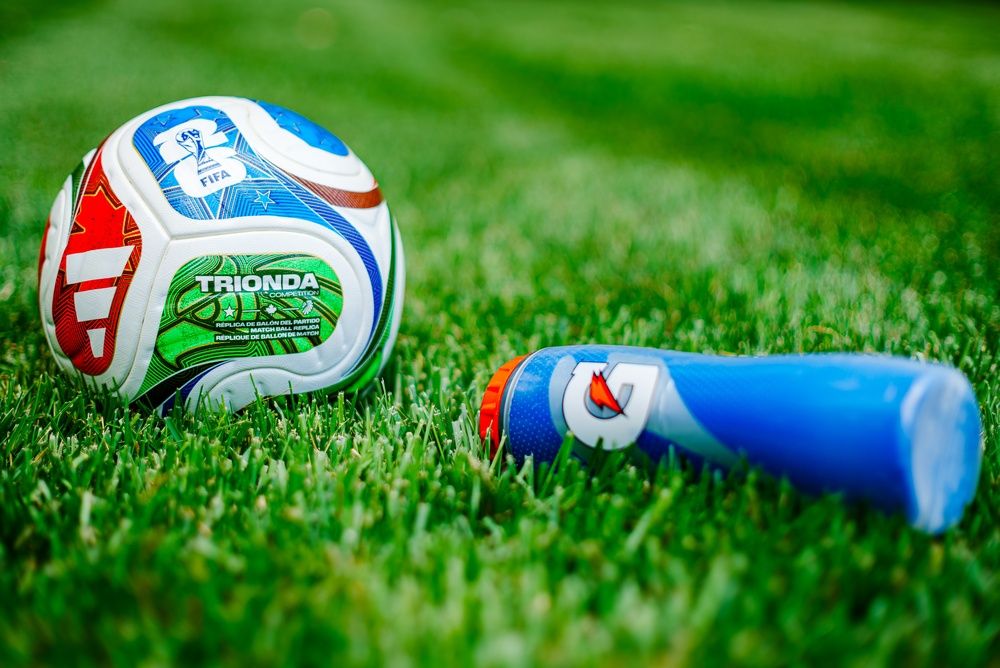
As the 2026 FIFA World Cup unfolds across the United States, Canada, and Mexico, a seemingly minor regulatory change has fundamentally altered the landscape of global sports broadcasting. The introduction of mandatory, three-minute hydration breaks during every half of all 104 matches marks a stark departure from previous temperature-dependent protocols. While the official narrative heavily emphasizes player welfare and physiological safety in demanding climates, a deeper analysis reveals a secondary, perhaps equally profound consequence. This rule change has suddenly created the most valuable mid-game advertising real estate in the history of football. For brands, broadcasters, and tactical analysts alike, a critical question emerges. Is the hydration break purely a health necessity, or a brilliantly disguised financial strategy? At Switas, we believe the answer is a highly calculated hybrid. This article explores the tactical shifts these mandatory pauses introduce, dissects the momentum-altering data, and calculates the sheer economic volume generated by this newly minted broadcast inventory.
The Anatomy of a Rule Change
Historically, football has prided itself on being a game of continuous flow. Unlike basketball, baseball, or gridiron—sports intrinsically designed around frequent stoppages that naturally accommodate commercial breaks—football demands 45 minutes of uninterrupted action per half. Previous iterations of the FIFA World Cup allowed for cooling breaks, but these were strictly conditional. They required a specific wet-bulb globe temperature threshold and a formal assessment by match officials prior to kickoff.
The 2026 World Cup has rewritten this long-standing doctrine. Regulators have mandated a universal, three-minute hydration stoppage at approximately the 22nd and 67th minutes of every single match. The rationale is uniformity. It ensures equal treatment across all 48 teams and all 16 venues, eliminating the guesswork of localized micro-climates. It recognizes that dehydration affects elite performance even in seemingly comfortable, climate-controlled stadiums. However, when you expand a tournament to 104 matches, universal rules scale rapidly. What looks like a simple three-minute pause on the pitch translates into a monumental paradigm shift in sports economics, international broadcast regulations, and tactical management.
The Official Stance on Health and Performance
Before diving into the financial windfall, it is crucial to validate the very real physiological basis for this rule. Modern football is faster, more aggressive, and more physically demanding than at any point in its history. The physical toll on athletes, many of whom are coming off grueling club seasons, is immense.
Sports science dictates that even a minimal drop in an athlete's body weight due to fluid loss can lead to significant cognitive and muscular decline. In football, where split-second decision-making dictates the outcome of a match, dehydration leads to misplaced passes, defensive lapses, and an exponentially increased risk of soft-tissue injuries. Furthermore, by mandating these breaks universally, a critical variable is removed from the tournament. A team playing under the closed roof in Dallas is now afforded the exact same recovery windows as a team playing in the humid, open-air environment of Miami. This standardization treats hydration not as a reactive emergency measure, but as a proactive performance baseline. From a purely medical standpoint, the hydration break is entirely justified. But in the modern sports ecosystem, a decision rarely exists in a vacuum.
The Tactical Disruption and Redefining Game Momentum
At Switas, we rely heavily on data to understand shifting paradigms. The user data regarding momentum shifts in football is incredibly pertinent to this new rule. The introduction of a guaranteed pause essentially introduces the timeout concept to a sport that has actively resisted it for over a century.
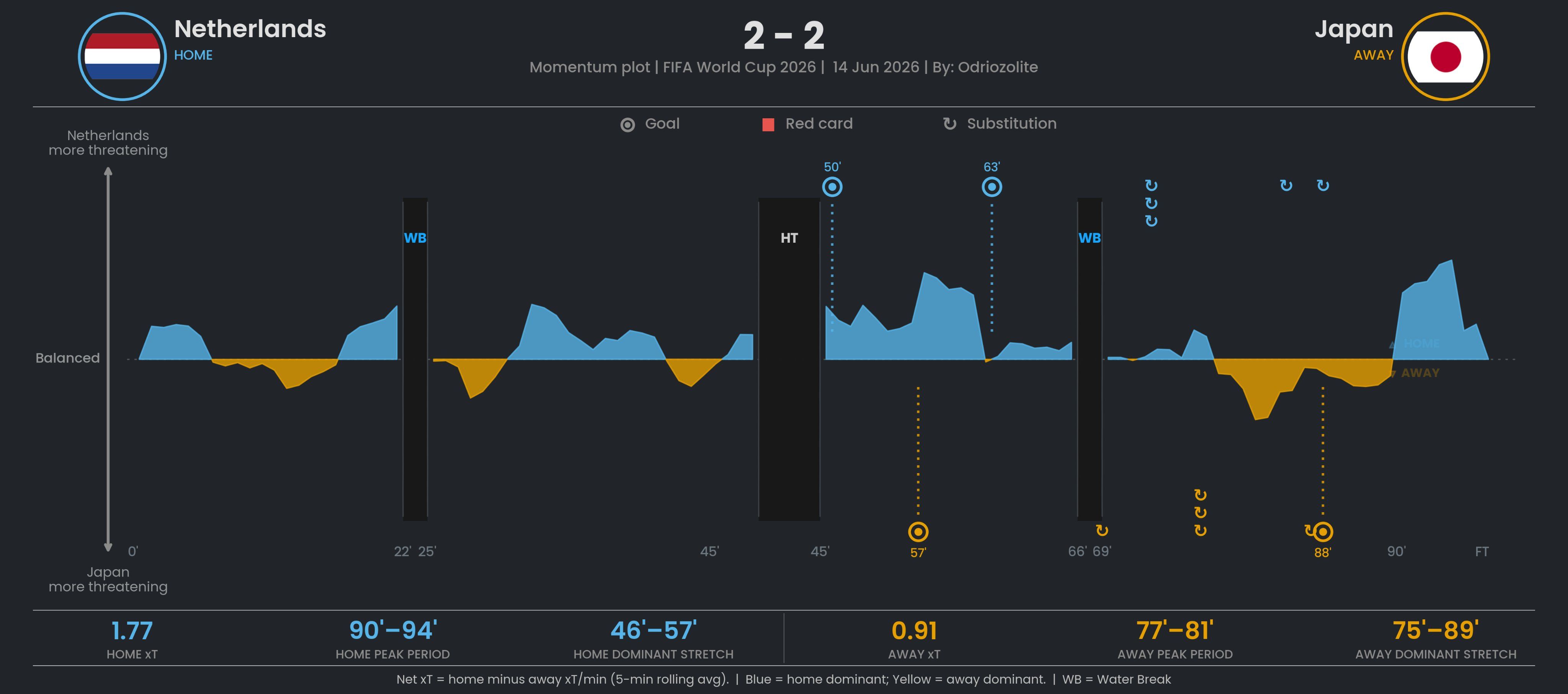
Football is a sport driven by rhythm and psychological dominance. A team utilizing a high-intensity press relies on suffocating the opponent, forcing errors, and building sustained, agonizing pressure. When the referee blows the whistle at the 22nd minute, that pressure is artificially released. For a team trapped in a low block and struggling to clear their lines, they suddenly receive a three-minute sanctuary. They can rehydrate, lower their heart rates, and crucially, receive direct tactical adjustments from their manager on the touchline. Conversely, a team dominating possession often finds their rhythm entirely broken. The emotional and physical momentum they spent twenty minutes building is reset to neutral.
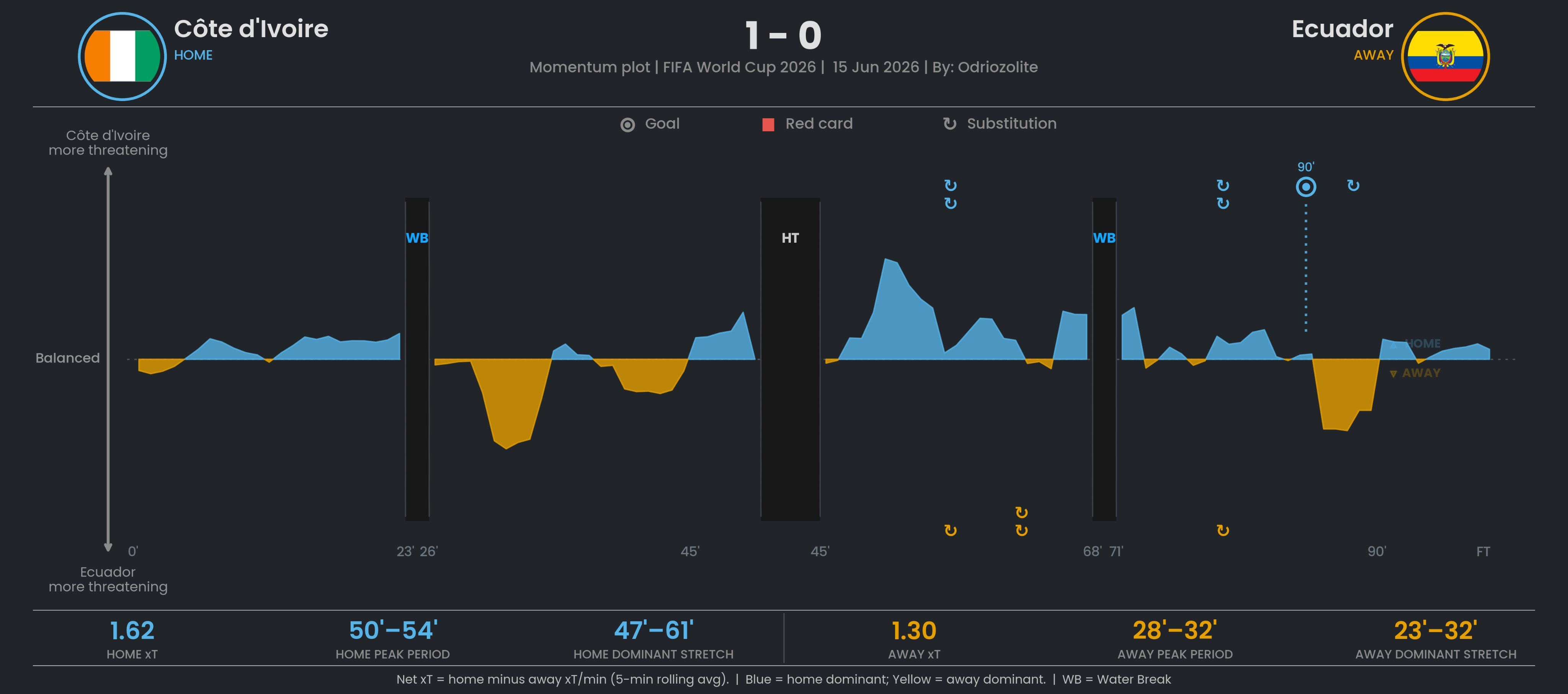
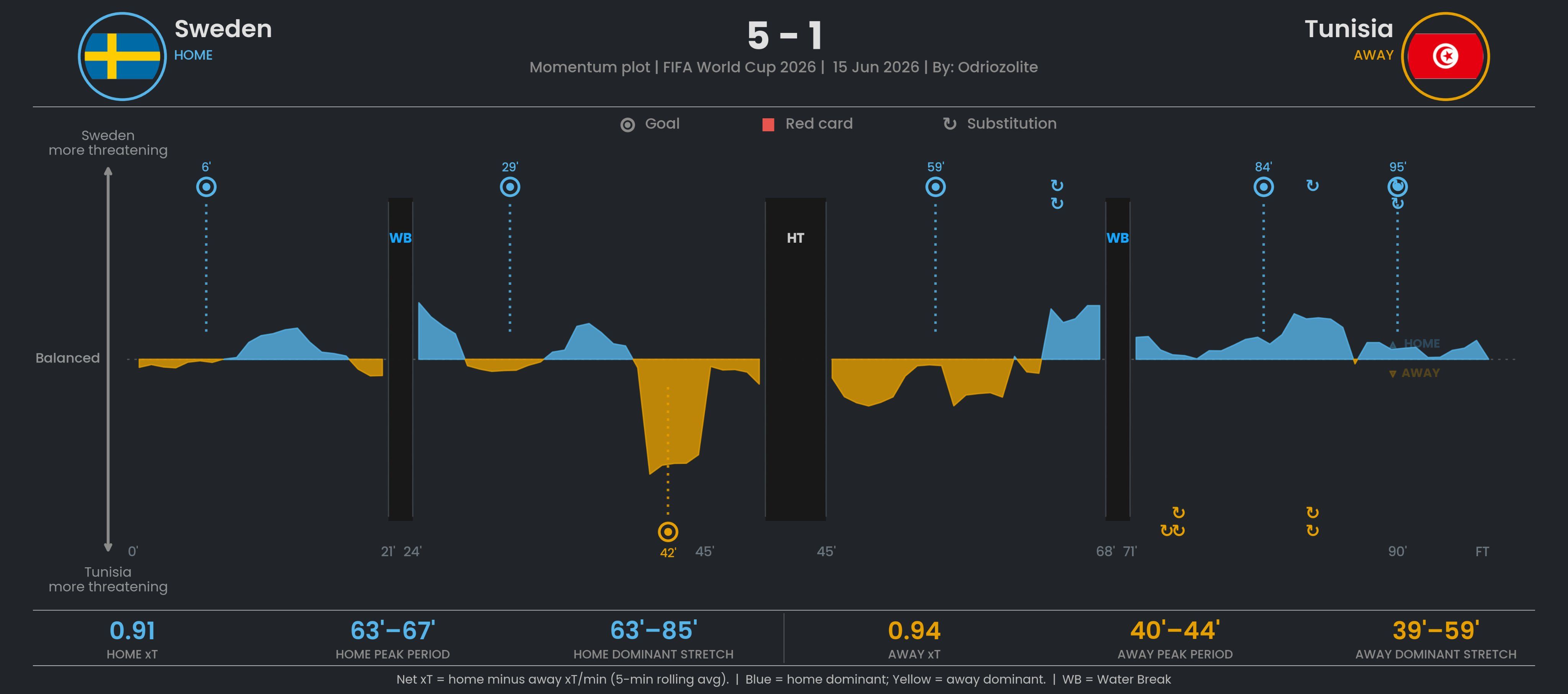
If we analyze expected goals accumulation and pressing intensity metrics, the periods immediately following a hydration break often mimic the erratic, feeling-out process of the first five minutes of a match. Managers are no longer just preparing a halftime team talk. They must now tactically periodize their game plans into four distinct quarters. Substitutions, pressing triggers, and energy conservation strategies are entirely rewritten to peak right before a break, knowing a recovery window is guaranteed.
The Strict 20-Second Buffer Rule and Broadcast Regulations
To balance the commercial appetite with the integrity of the game, a very strict regulatory framework governs exactly how these three minutes are broadcast. Broadcasters cannot simply cut to a commercial the second the referee blows the whistle, nor can they return just as the ball is being kicked.
The governing bodies have implemented a mandatory buffer zone to protect the viewing experience. During the 180-second hydration break, the first 20 seconds and the final 20 seconds must remain completely ad-free and focused purely on the live pitch.
The initial 20-second live window captures the immediate raw emotion of the stoppage. Viewers see the referee’s signal, the players' immediate physical reactions, the sheer fatigue on their faces, and their initial interactions with the coaching staff as they jog to the technical area. It provides a seamless transition from live action to the stoppage.
Similarly, the final 20-second live window ensures that audiences are re-immersed into the stadium atmosphere before play resumes. It captures the players returning to their tactical formations and ensures no one misses a surprise quick restart. Consequently, this strict rule reduces the 180-second break down to exactly 140 seconds of actual monetizable commercial inventory. This 140-second window is the precise battleground where billions of dollars will change hands.
The Global Broadcast Divide How Different Nations Utilize the Break
One of the most fascinating aspects of the 2026 World Cup hydration break is how differently it is handled across the globe. Because domestic broadcast rights are managed by different networks with varying regulatory constraints and cultural expectations, the viewer experience of these 140 seconds varies wildly depending on the country.
In heavily commercialized markets, the hydration break is treated as a premium advertising goldmine. In the United States, networks like Fox and Telemundo maximize this exact 140-second window, filling it with high-budget, super-premium commercials. The same aggressive commercialization is seen in Latin American markets via networks like TelevisaUnivision in Mexico and Globo in Brazil. For these broadcasters, the hydration break is an opportunity to recoup massive broadcast rights fees, offering brands a captive audience that cannot change the channel because the game will resume in mere moments.
Conversely, European public service broadcasters take a radically different approach. In the United Kingdom, the BBC operates entirely without commercial interruptions. During the hydration break, the BBC keeps the cameras firmly fixed on the stadium. They utilize this time for deep tactical analysis, cutting back to their studio pundits to dissect formations, or using on-screen graphics to analyze player heat maps and passing networks. In Germany, public broadcasters ARD and ZDF similarly eschew commercials during this window. They focus on the human element, zooming in on managers frantically drawing on whiteboards and players taking in vital fluids. Broadcasters in Scandinavian countries, such as SVT in Sweden, also follow this non-commercial route, prioritizing the pure sporting narrative over financial gain.
This global divide highlights a massive cultural split in sports consumption. While an American viewer is watching a blockbuster automotive commercial, a British viewer is watching a detailed breakdown of a team's defensive frailties.
The Economic Engine and Monetizing the Net Inventory
For the networks that do run advertisements, the financial implications are staggering. To understand the true economic volume driven by the hydration breaks, Switas has modeled the total available net commercial inventory.
Let us break down the exact amount of commercial time this new rule creates across the tournament, factoring in the strict buffer rules.
Total Matches in the Tournament: 104
Breaks per Match: 2
Total Breaks in the Tournament: 208
Total Duration of Each Break: 180
Seconds Net Commercial Time per Break (Minus the 40-second buffer): 140
Seconds Total Global Commercial Seconds: 29,120 Seconds
To put this into an advertising perspective, 29,120 seconds of pure, uninterrupted mid-game broadcast time equals approximately 970 standard 30-second commercial spots.
In traditional football broadcasting, networks are starved for in-game advertising. Pre-match, halftime, and post-match ad slots are valuable, but they suffer from audience drop-off. Viewers step away from their screens. A hydration break is fundamentally different. It is an unmissable pause in the absolute middle of the action, creating an environment of captive, highly engaged attention.
The 2026 World Cup will draw a cumulative global audience in the billions. A synchronized global 30-second slot during these specific breaks commands an astronomical premium. Based on Switas financial modeling, if we conservatively estimate the aggregate global value of a 30-second in-game spot across all commercialized territories to be roughly 2.5 million dollars, the math becomes clear. Those 970 spots generate an entirely new, ring-fenced micro-economy worth over 2.4 billion dollars. This revenue is generated purely from the airtime created by players drinking water.
The Digital Frontier of Streaming and Dynamic Ad Insertion
The true genius of monetizing these 140-second windows lies in how modern audiences consume media. The 2026 World Cup serves as the ultimate test case for streaming and Connected TV.
During these hydration breaks, digital feeds do not just show a static, universal commercial. Utilizing Dynamic Ad Insertion, platforms can stitch highly targeted, personalized advertisements into the live stream in real-time. The ad shown to a viewer in New York will be completely different from the ad shown to a viewer in Los Angeles, based on their specific consumer profiles.
Streaming Cost Per Mille rates for this specific in-game inventory are reaching unprecedented highs, often commanding massive premiums over standard digital video inventory. When a hydration break occurs, traffic does not just spike. It creates a tsunami of data. Billions of simultaneous ad requests hit the ad-tech infrastructure globally. Broadcasters and publishers who have built the server capacity to handle this real-time bidding without timing out are capturing massive yields. Because the breaks happen at roughly the same time each half, ad-tech platforms can pre-load and cache the targeted ads seconds before the referee blows the whistle, ensuring perfect fill rates at peak market prices.
Switas Consulting Perspective on Strategic Implications for Brands
For brands and corporate partners looking to capitalize on this phenomenon, the hydration break represents a fundamental shift in consumer engagement. At Switas, we advise our clients to look beyond traditional sponsorships and deeply understand the behavioral psychology of this specific pause in play.
Firstly, brands should aggressively target the hydration break as a standalone property. Much like a halftime show, the hydration break can be sponsored natively. A sports drink manufacturer, a health technology company, or a data analytics firm could seamlessly own this window, associating their brand directly with player recovery, performance metrics, and tactical recalibration.
Secondly, contextual creative messaging is paramount. The mindset of the viewer during a hydration break is highly specific. It is a moment of tension relief and anticipation. Brands that run generic creative campaigns during this window are squandering their investment. Advertisements should be contextually relevant, acknowledging the pause in the game, the intense heat of the moment, or the strategic chess match occurring between the managers.
Finally, the hydration break is the ultimate second-screen activation window. During this pause, a massive portion of the audience will instinctively look down at their mobile devices. This is the optimal time for interactive, digital activations. Live polling, rapid tactical analysis drops, exclusive in-app merchandise releases, or real-time gaming integrations will see massive conversion spikes precisely during these 140 seconds of commercial time.
A Symbiotic Masterstroke
Ultimately, the 2026 World Cup hydration break is a perfectly executed synthesis of health science and commercial strategy. The governing bodies have managed to implement a rule that is virtually immune to public criticism because it undeniably protects the physical welfare of the athletes in an era of unprecedented physical exertion. It is a highly necessary evolution of modern sports science.
However, by standardizing it, formalizing its duration, implementing strict buffer zones, and injecting it into every single one of the 104 matches, they have quietly engineered the most lucrative structural change to football broadcasting in a generation. They have successfully adapted the commercial rhythm of the world's most popular sport without altering the fundamental rules of play.
For the purist watching on a European public broadcaster, it is a moment to catch your breath and analyze the shifting momentum of the match through detailed tactical breakdowns. For the players on the pitch, it is a vital lifeline to maintain elite physical and cognitive performance. But for the global economy of the sports business, those precise windows of stoppage time represent a multi-billion-dollar masterstroke, a golden opportunity where health, strategy, and unprecedented financial yield perfectly align on the world's biggest stage.