
In the modern sports ecosystem, a Grand Slam tennis tournament is far more than a battle of athletic endurance; it is a global, multi-week marketing summit. For two weeks, the eyes of the world are fixed on Melbourne, Paris, London, or New York, providing brands with billions of hours of screen time and unparalleled access to one of the most affluent, educated, and globalized fan bases in sports. At Switas Consulting, we continuously analyze the intersection of brand positioning and sports economics to understand how massive global conglomerates justify writing eight-figure checks for a spot on a tennis court.
The financial commitments required to partner with the Grand Slams—the Australian Open, Roland Garros, Wimbledon, and the US Open—are staggering. Yet, companies like Rolex, Kia, Renault, JPMorgan Chase, and American Express view these not as simple advertising expenses, but as highly sophisticated, multi-layered investments. To understand the true mechanics of sports marketing today, we must look beyond the visible logos and dissect the strategies, the estimated financial figures, and the underlying marketing philosophies that drive the business of tennis.
The Australian Open: The Power of Longevity and Fleet Operations
The Australian Open, affectionately known as the "Happy Slam" kicks off the sporting calendar in January. Positioned strategically in the Asia-Pacific region, it serves as a massive gateway for brands looking to solidify their presence in Eastern markets while maintaining a global footprint.
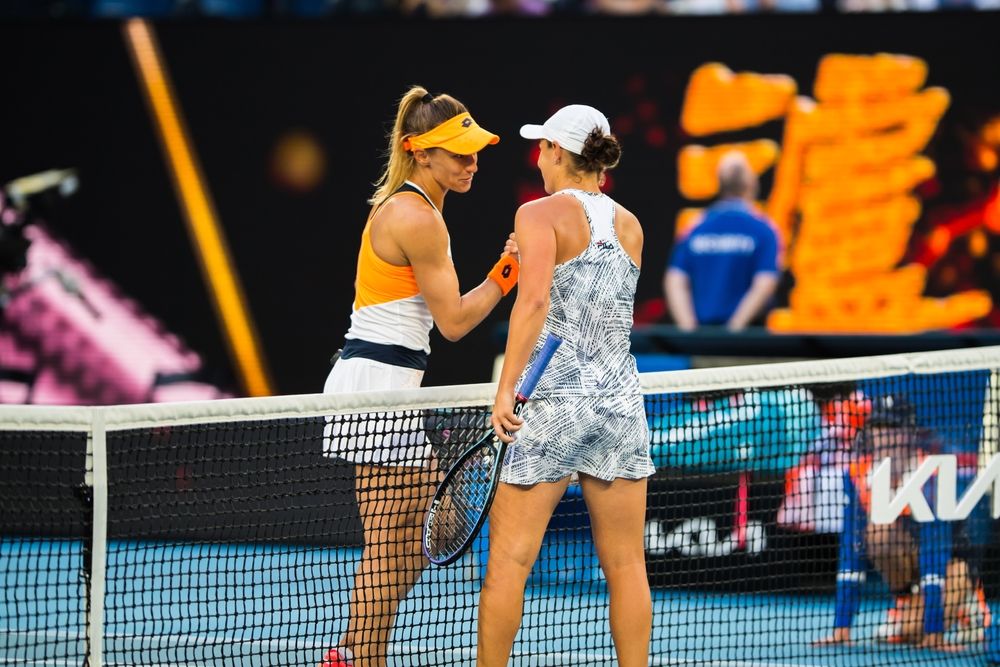
The cornerstone of the Australian Open’s commercial success is its relationship with the South Korean automotive giant, Kia. This partnership, which began in 2002, is one of the longest-running in sports history and serves as a masterclass in brand consistency. Kia recently extended its partnership through 2028. Industry estimates suggest that this latest five-year agreement is valued at roughly $100 million, breaking down to an estimated $20 million per year. However, the true cost and value of this sponsorship extend far beyond the cash transaction.
Kia employs a massive "Value-in-Kind" (VIK) strategy. Every year, the automaker provides a fleet of over 130 vehicles to transport players, VIPs, and officials across Melbourne. This fleet operation is a logistical marvel and serves as a dynamic, moving showroom. Millions of fans worldwide see their favorite athletes stepping out of Kia’s latest electric or hybrid models. This repetitive, high-status association slowly shifts consumer perception, elevating Kia from a budget-friendly alternative to a globally trusted, innovative automotive player.
Furthermore, Rolex maintains its ubiquitous presence as the Official Timekeeper in Melbourne. While Rolex is notoriously secretive about its exact financial distributions, the brand is estimated to spend over $190 million annually across all its global sports sponsorships. Tennis commands a massive slice of this pie. For Rolex, the strategy is not about selling a watch to the average viewer; it is about reinforcing an aura of elite performance and timeless prestige, ensuring that when a consumer reaches a certain milestone of wealth, a Rolex is the undisputed symbol of their success.
Roland Garros: Elegance, Endurance, and Automotive Evolution
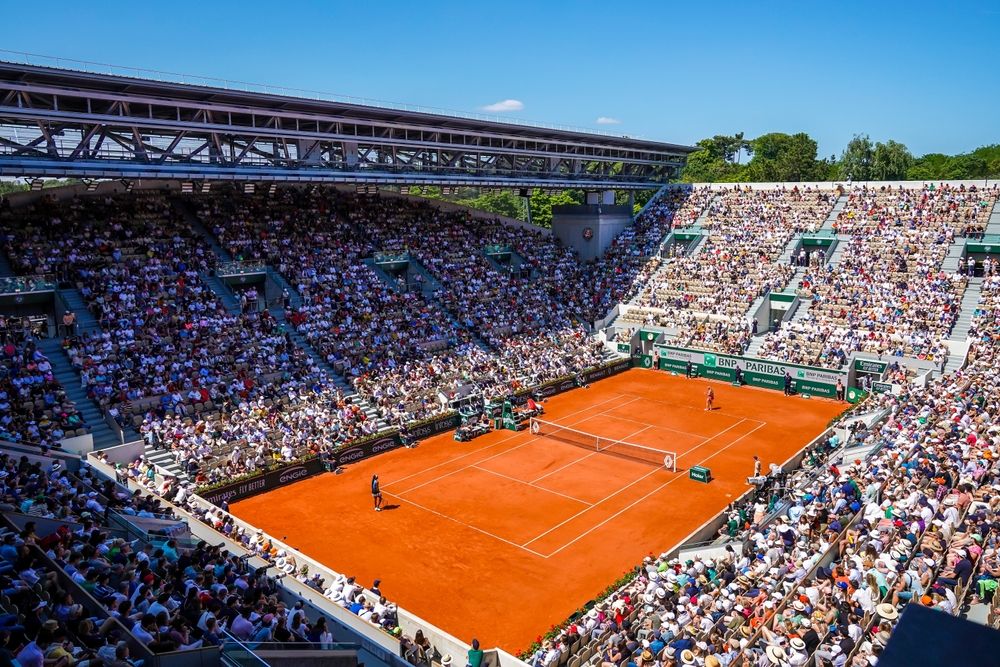
When the tour moves to the red clay of Paris in the spring, the marketing narrative shifts to endurance, elegance, and European heritage. Roland Garros presents a unique aesthetic challenge for brands: the ubiquitous terra-cotta clay dictates the visual palette, forcing sponsors to adapt their branding to fit the tournament's chic, Parisian identity.
A prime example of strategic maneuvering at Roland Garros is Renault’s aggressive entry into the sport. In 2022, Renault ousted its fierce domestic rival, Peugeot, to become the premium automotive partner of the French Open. This five-year agreement, running until 2026, is estimated to cost Renault between €5 million and €7 million annually. From a marketing perspective, this was a calculated coup. Renault utilized this platform to globally launch its new electric vehicle identity. The Renault diamond logo is prominently displayed on the nets of the show courts—a highly visible, premium piece of real estate that guarantees maximum television exposure during every single rally. Like Kia, Renault supplements this cash payment with a massive fleet of electrified vehicles, directly aligning its brand with sustainability and the future of mobility in the heart of Europe.
BNP Paribas is another titan of the French Open, holding the title of the tournament's longest-standing partner for over half a century. While their exact current financial outlay is protected, their strategy highlights the concept of institutional embedding. BNP Paribas is so deeply intertwined with the visual identity of Roland Garros that fans instinctively associate the bank’s green logo with the red clay. This level of brand synonymity creates a defensive moat that competitors cannot breach, generating immense trust and familiarity within the European financial sector.
Wimbledon: The "Clean Court" Philosophy and the Scarcity Principle
If the US Open is the pinnacle of commercial noise, Wimbledon is the ultimate exercise in restraint. The All England Lawn Tennis Club (AELTC) operates on a "Clean Court" philosophy. You will not find spinning digital LEDs, massive corporate banners, or neon logos screaming for attention on Centre Court. Yet, paradoxically, Wimbledon is one of the most lucrative and highly sought-after sponsorship properties in the world.
At Switas Consulting, we point to Wimbledon as the ultimate validation of the "Scarcity Principle" in marketing. By severely restricting the number of sponsors and dictating that partner logos must be muted—often blending into the traditional green and purple color scheme—Wimbledon creates an environment of exclusivity. Brands are not buying a billboard; they are buying entry into a highly exclusive aristocracy.
Barclays recently took over from HSBC as the official banking partner of Wimbledon in 2023. Industry analysts estimate this deal to be worth around £20 million (approximately $25 million) per year. Barclays pays this premium not for flashy logos, but for the prestige of the association and the unparalleled VIP hospitality rights, allowing them to entertain ultra-high-net-worth clients in the most exclusive marquees in London.
The technology giant IBM has partnered with Wimbledon for over three decades, providing a brilliant case study in B2B marketing and Value-in-Kind services. While a massive cash figure is not the focal point of the IBM deal, the technological infrastructure they provide is worth tens of millions. IBM uses Wimbledon as a live, high-stakes sandbox to showcase its cutting-edge artificial intelligence, data analytics, and cloud computing capabilities. When a CEO of a Fortune 500 company is sitting in an IBM suite at Centre Court, watching real-time AI-generated match analytics, IBM doesn't need a billboard to sell its software; the product is selling itself through a flawless, high-pressure execution.
Similarly, lifestyle brands like Ralph Lauren and Evian leverage Wimbledon’s heritage. Ralph Lauren pays to design the iconic, vintage-inspired uniforms for the umpires and ball kids, seamlessly integrating their apparel into the fabric of the event. Evian, as the official water, aligns its brand with health, purity, and upper-class European sophistication. Slazenger, providing the official tennis balls since 1902, holds the record for the longest sports sponsorship in history, proving that heritage itself is a marketable asset.
The US Open: The Epicenter of Experiential Marketing
Late summer brings the tour to the bustling, loud, and hyper-commercialized environment of New York City. The US Open at Flushing Meadows is the antithesis of Wimbledon’s quiet restraint. It is a commercial juggernaut, generating more revenue than any other Grand Slam, heavily driven by massive corporate partnerships and a philosophy of maximum visibility.
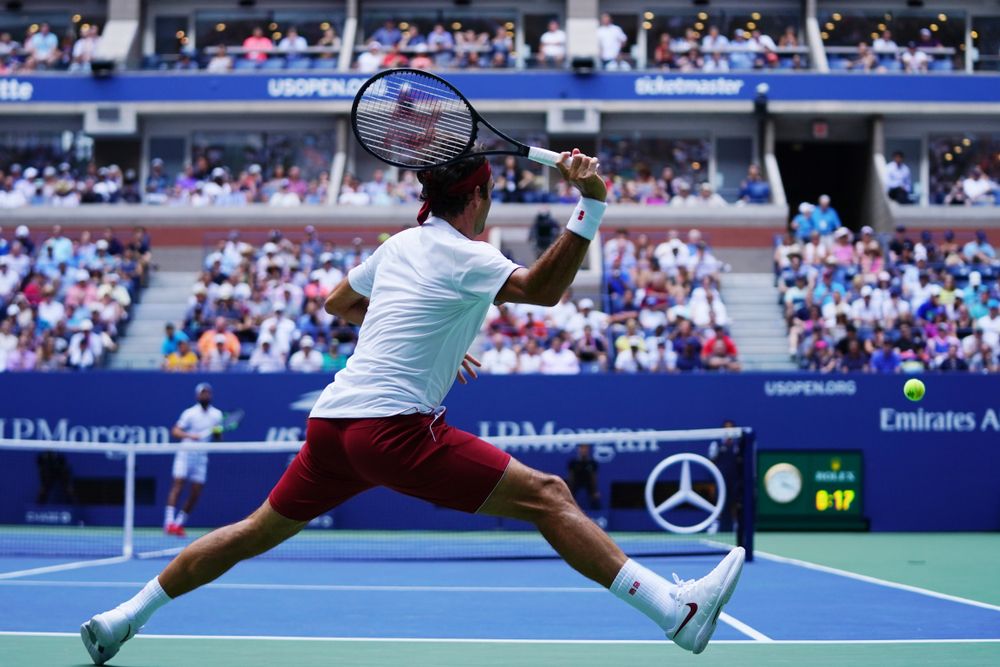
The financial sector dominates New York, and this is reflected on the courts. JPMorgan Chase is a foundational pillar of the US Open, with an annual sponsorship spend estimated at around $20 million. Their strategy is highly focused on experiential marketing and B2B hospitality. JPMorgan commands massive private suites and hospitality pavilions where billions of dollars in corporate deals are negotiated over the course of two weeks. They also use the sponsorship to reward their Chase Sapphire Reserve cardholders with exclusive access and lounges, directly tying the sponsorship to customer retention and high-end credit card acquisitions.
American Express (Amex) follows a similar, highly aggressive experiential strategy, spending an estimated $10 million to $15 million annually. Amex does not just put its logo on the wall; it builds massive, interactive "Amex Fan Experiences" on the tournament grounds. They offer their cardholders dedicated entrance lanes, earpieces to listen to the live broadcast, and access to exclusive Centurion Lounges. This is a masterclass in translating a macro-sponsorship into direct, tangible benefits for the individual B2C consumer, creating intense brand loyalty.
Emirates Airlines flexes its global financial muscle at the US Open as well, deeply integrating itself into the fabric of American tennis. Operating under a historic multi-year agreement previously valued at $90 million over seven years (averaging roughly $13 million annually), Emirates secures the naming rights to the US Open Series and gains prime on-court visibility. Meanwhile, Mercedes-Benz, spending an estimated $10 million annually, aligns its luxury sedans and SUVs with the affluent demographic of the New York tennis crowd, providing the official tournament vehicles and securing prime court-side signage.
The New Era: ATP, WTA, and the PIF Disruption
While the Grand Slams hold historical dominance, the broader tennis ecosystem is currently experiencing a massive financial disruption fueled by sovereign wealth. Any comprehensive analysis of tennis marketing must address the recent entry of Saudi Arabia’s Public Investment Fund (PIF).
In early 2024, the ATP Tour announced a monumental strategic partnership with PIF. While the exact financial terms remain fiercely guarded, the investment is widely understood to be in the hundreds of millions of dollars, dwarfing traditional corporate sponsorships. PIF has become the official naming rights partner of the ATP Rankings and has secured premier court-side branding at massive tournaments including Indian Wells, Miami, Madrid, Beijing, and the season-ending ATP Finals in Turin.
This move mirrors Saudi Arabia’s strategy in golf (LIV Golf) and football (Newcastle United). The strategy here is not traditional product marketing, but rather global geopolitical branding and economic diversification. By embedding itself into the foundational infrastructure of the ATP Tour, PIF is rapidly accelerating the commercial growth of the sport while simultaneously utilizing the global prestige of tennis to reshape international perceptions of the Saudi state.
Strategic Marketing Insights from Switas Consulting
By dissecting the millions of dollars flowing through the global tennis circuit, we at Switas Consulting can identify several critical insights that apply to businesses of all sizes across B2B and B2C sectors.
1. The Transition from Logo Visibility to Tangible Experience
The days of a brand paying $10 million simply to have its name painted on a wall are over. As demonstrated by American Express and JPMorgan Chase at the US Open, modern sponsorship is about "activation." Brands are demanding a direct Return on Investment (ROI) by creating physical, exclusive experiences that directly drive customer acquisition and retention. If a sponsorship does not offer a tangible benefit or a memorable experience to the end consumer, its value is severely diminished.
2. The Ultimate B2B Networking Sandbox
Consumer-facing visibility is only half the story. For companies like IBM, Barclays, and Rolex, tennis tournaments serve as the world’s most glamorous B2B networking environments. The millions spent on sponsorship fees are often justified entirely by the "Hospitality" budget. When high-level executives are hosted in luxury suites, barriers to communication drop. A $15 million sponsorship is easily justified if the resulting networking environment facilitates $100 million in enterprise software sales or banking contracts. The event itself becomes the showroom.
3. The Power of the Scarcity Principle
Wimbledon remains the ultimate proof that less is often more. By refusing to clutter its courts with digital advertisements and strictly limiting its commercial partners, Wimbledon creates artificial scarcity. This restriction drives the perceived value of the sponsorship through the roof. It is a vital lesson for premium brands: hyper-visibility can sometimes dilute brand equity, whereas maintaining an aura of exclusivity and operating within strict brand guidelines can allow a company to charge premium pricing and command unmatched loyalty.