The digital landscape is undergoing a silent but tectonic shift. For over two decades, search engine optimization (SEO) was dominated by a single, simple paradigm: optimize web pages for human eyes, index them via web crawlers, and structure data using complex schema markup so machines could understand basic entities. But as we transition from the era of search engines to the era of autonomous AI agents, this paradigm is rapidly breaking down.
Today, businesses face a critical "context deficit." While large language models (LLMs) can write elegant code, draft documents, or analyze massive datasets, they remain fundamentally constrained by the lack of structured, up-to-date, and proprietary business context. This knowledge—ranging from database schemas and custom business metrics to internal playbooks and senior engineers' unwritten insights—lives fragmented across siloed wikis, shared drives, slide decks, and chat logs.
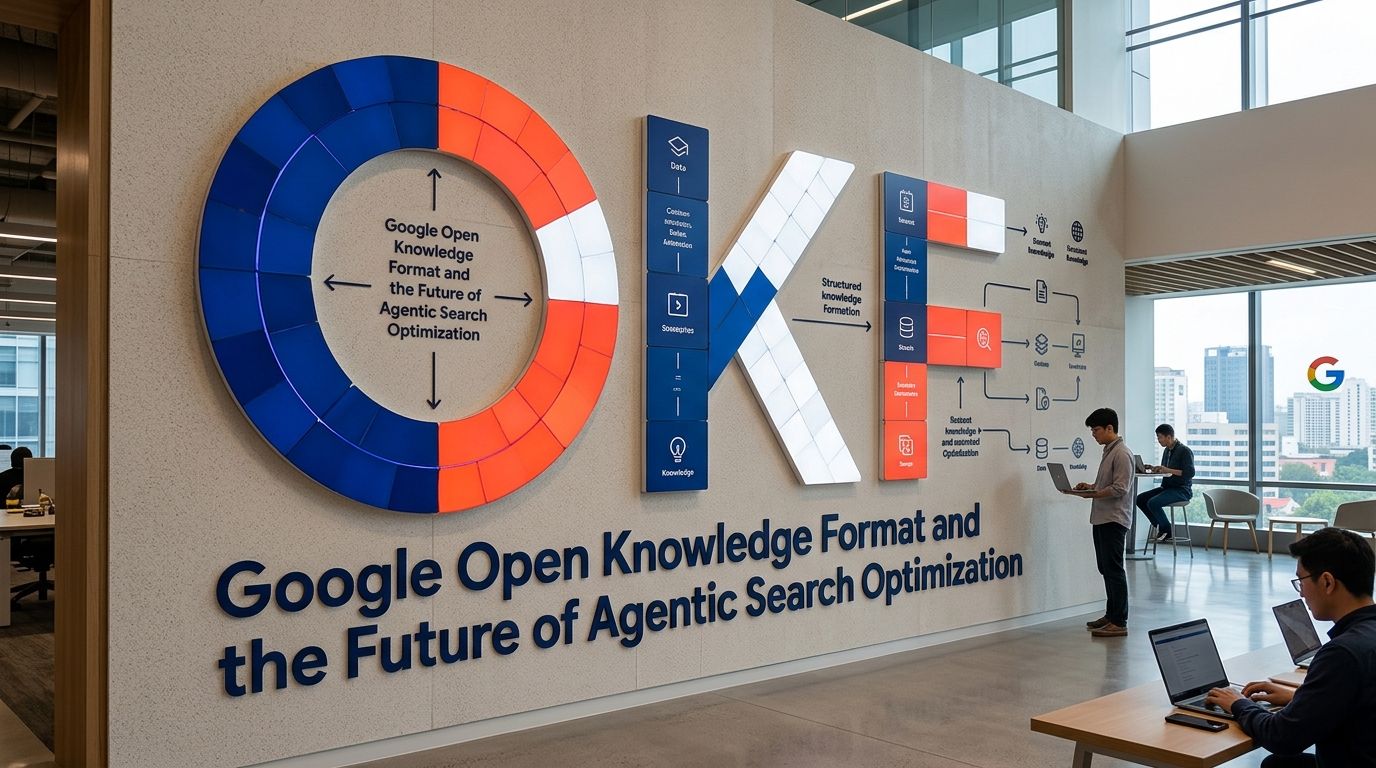
To bridge this gap, Google Cloud recently introduced the Open Knowledge Format (OKF) v0.1, an open, vendor-neutral specification designed to represent organizational knowledge as an interoperable "digital brain." By formalizing what is known as the "LLM-Wiki" pattern, OKF marks the end of traditional, stateless Retrieval-Augmented Generation (RAG) and ushers in a compounding, agentic future.
For forward-looking organizations and consulting pioneers like Switas, OKF is not just a technical update. It is the foundation of a brand-new commercial discipline: Agentic Search Optimization (ASO).
1. The Death of Stateless RAG and the Rise of Compounding Knowledge
To understand why Google’s OKF is a breakthrough, we must first examine why our current AI integration methods are hitting a wall.
Most modern enterprise AI solutions rely on Retrieval-Augmented Generation (RAG). When a user asks a question, a RAG system runs a similarity search across vectorized document chunks, retrieves the most relevant snippets, and feeds them into the LLM context window to generate an answer.
While RAG is highly effective for static Q&A, it suffers from several systemic limitations:
Statelessness: Every query is treated as an isolated event. The system does not "learn" from previous interactions or synthesize new connections.
Retrieval Noise and Chunk-Boundary Errors: Fragmenting a 50-page PDF into 500-token chunks often slices critical context in half, leading to incomplete or misleading answers.
Lack of Synthesis: Traditional RAG excels at retrieving raw information but struggles to maintain an evolving, singular "source of truth."
In April 2026, AI pioneer Andrej Karpathy (co-founder of OpenAI and former Director of AI at Tesla) proposed a revolutionary alternative: the LLM Wiki pattern.
Instead of searching raw, unstructured documents from scratch every single time, Karpathy argued that the correct way to use LLMs is as compilers. In this paradigm, when a new document, dataset, or client brief arrives, the LLM reads it once, extracts key concepts, and incrementally "compiles" them into a structured, persistent, and highly interlinked markdown-based wiki.
If new information arrives that contradicts an older entry, the LLM doesn't just store both; it actively resolves the conflict, updates the entity pages, revises topic summaries, and strengthens or challenges the evolving synthesis. Knowledge compounds over time, exactly like a human brain.
Google Cloud’s OKF is the formalization of this exact LLM-Wiki pattern into an open industry standard.
2. Demystifying the Open Knowledge Format (OKF)
At its core, OKF is designed to be extraordinarily simple. Google took a strong philosophical stance: we do not need complex databases, proprietary SDKs, or heavy runtimes to represent knowledge. Instead, knowledge should be stored in a format that is universally portable, easy for humans to read, and natively understood by LLMs.
That format is Markdown with YAML frontmatter.
If you can git clone a repository, you can deploy an OKF bundle. If you can cat a text file, you can read it. It requires no databases, no central authority, and no platform lock-in. It renders beautifully on GitHub, can be organized in tools like Obsidian or Notion, and can be indexed instantly by any modern AI agent.
The Anatomy of an OKF Knowledge Bundle
An OKF bundle is structurally represented as a nested directory of directories, resembling a human-engineered wiki. It contains three primary components:
The Entry Points (index.md): Every OKF bundle requires an entry point file. This index file outlines the structure of the knowledge base, directing incoming agents to the core concepts, datasets, and playbooks available.
Concept Directories: Instead of organizing files by the raw documents they came from (e.g., q4_marketing_report.pdf), OKF reorganizes information by concepts (e.g., /metrics/customer_acquisition_cost.md). Each concept is represented as a single, atomic markdown document.
The Log File (log.md): A living ledger where autonomous agents record their activities. When an agent updates a concept, resolves a data contradiction, or ingests a new source, it documents the change in the log file, creating an auditable paper trail.
The Concept Page Structure
Every individual markdown file representing a concept in an OKF bundle contains a strict structure consisting of two parts: YAML frontmatter and the Markdown body.
---
type: concept
title: Customer Acquisition Cost (CAC)
description: The primary financial metric used to evaluate marketing efficiency at Switas.
resource: bigquery://switas-analytics/finance/cac_summary
tags:
 - finance
 - marketing-efficiency
 - saas-metrics
timestamp: 2026-06-18T14:30:00Z
---
After this structured frontmatter, the document opens into a free-form Markdown Body. This is where the magic happens. The body can contain natural language definitions, raw data tables, calculation formulas, playbooks, and—crucially—interlinks using standard markdown bracket notation (e.g., [[LTV_Calculation]]).
These interlinks allow agents to navigate the directory structurally, transforming a flat folder of text files into a highly connected, navigable Semantic Knowledge Graph.
3. "Semantic Unbaking": The Philosophy of Natural Knowledge
One of the most profound terms to emerge from the release of OKF is "Semantic Unbaking."
For years, the technology industry attempted to force human knowledge into highly rigid, machine-readable schemas (like JSON-LD or microdata). This process was brittle, unnatural, and fundamentally detached from how humans express ideas. It was an attempt to "bake" fluid human thought into cold, hard machine structures.
OKF flips this approach on its head. Because modern LLMs are incredibly adept at reading natural language, OKF acts as a form of "semantic unbaking." It allows organizations to document their business rules, processes, and metrics in natural, expressive language.
You no longer need to write a complex API to explain a business calculation to an AI agent. You simply write a playbook:
# Playbook: Diagnosing Mid-Funnel Conversion Drops
When an analyst agent detects a drop in mid-funnel conversion rate greater than 5% week-over-week, follow these steps:
1. Query the `conversions_db` table to isolate the traffic source.
2. Cross-reference results with our [[Marketing_Campaign_Log]].
3. If the drop is isolated to paid search, trigger the [[Google_Ads_Audit_Playbook]].
This represents a more natural way to structure knowledge. You tell the agent: "Here is where you go in my organization's brain to get this information, and here is how we want you to reason about it."
4. The Switas Opportunity: Monetizing Expertise and Leading the ASO Revolution
As enterprise AI matures, the demand for structured knowledge is going to skyrocket. Businesses will no longer compete solely on web traffic; they will compete on agentic accessibility.
This opens up a massive commercial horizon for Switas across two primary vectors:
I. Agentic Search Optimization (ASO) Consulting
We are entering a world where consumers do not search the web directly; their AI agents do it for them. When a user asks their personal agent, "Find me the best consulting firm to restructure our data stack under OKF guidelines," that agent will crawl the web, looking for machine-accessible knowledge.
If your business's expertise is locked behind gated PDFs or unstructured, JavaScript-heavy websites, the agent will bypass you entirely.
Switas can pioneer the transition from traditional SEO to ASO (Agentic Search Optimization). Our consultants can help enterprises:
- Audit their existing unstructured knowledge repositories.
- Extract proprietary business logic, playbooks, and data schemas.
- Compile and structure these assets into fully compliant, highly crawlable OKF Knowledge Bundles.
- Integrate direction paths in their llms.txt files to signal to external agents that a verified OKF bundle is ready for consumption.
II. The Knowledge Bundle Marketplace
Currently, when a business needs specialized expertise—be it legal compliance, tax structuring, or advanced SEO auditing—they hire expensive consultants to perform manual audits.
In the near future, we will see the rise of a Global Knowledge Marketplace, where organizations buy and sell verified, agent-runnable OKF bundles.
Imagine Switas compiling its proprietary growth hacking frameworks, digital transformation playbooks, or data audit methodologies into modular OKF bundles. A client's AI agent could purchase the Switas Growth Playbook OKF, mount it directly into its own system filesystem, and immediately begin executing audits using Switas's specialized reasoning logic.
Furthermore, these bundles are not static. As market conditions, search algorithms, or consulting best practices evolve, the publisher updates the master OKF bundle. These updates propagate across the network, ensuring that the client's localized AI intelligence is continuously refreshed.
5. Comprehensive FAQ: Navigating the Technical and Strategic Nuances of OKF
As OKF gains traction, enterprise teams, developers, and marketing leaders are bound to ask critical questions. Here is what you need to know:
Q1: How do external AI agents actually discover and access our OKF bundles?
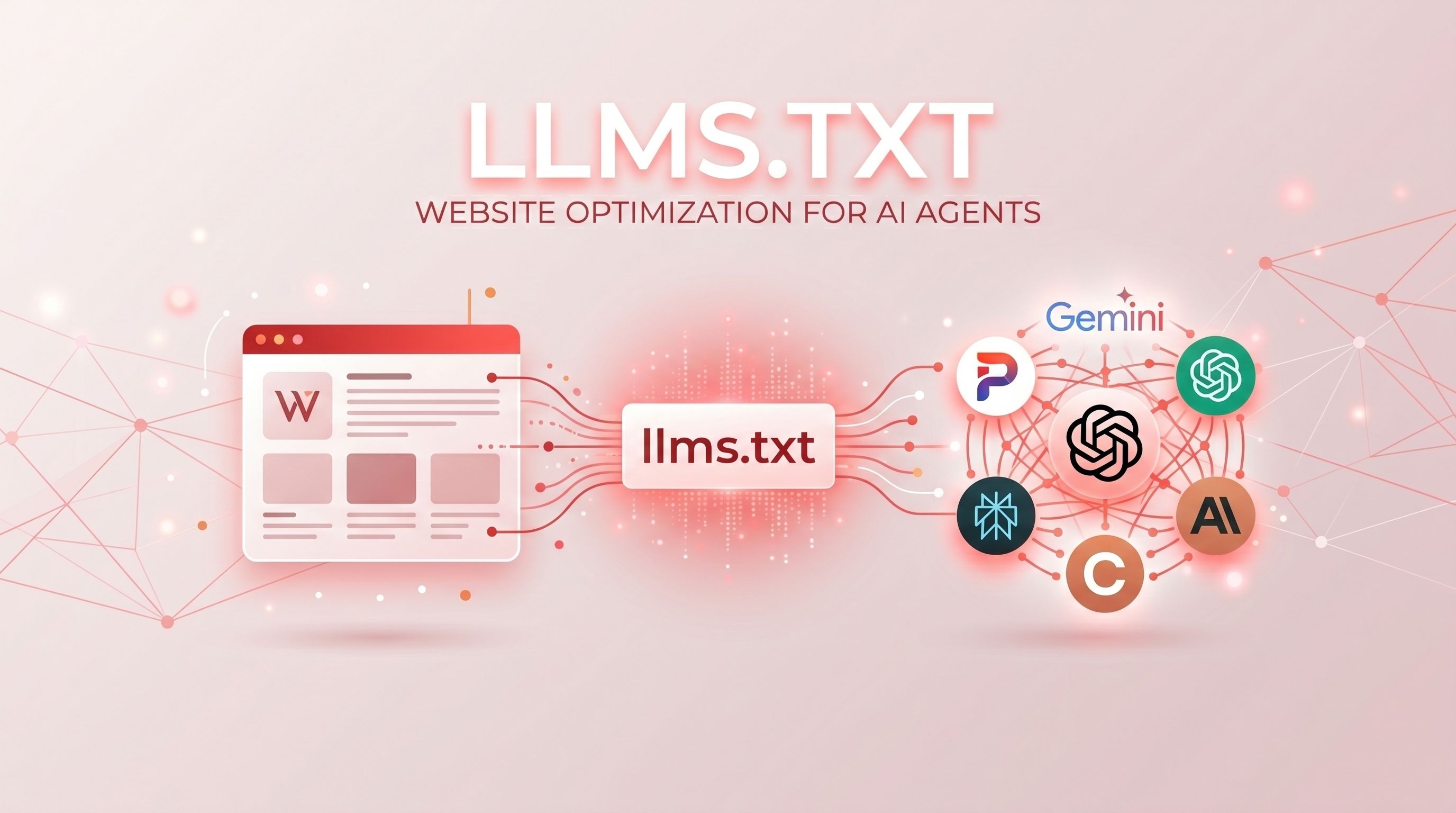
Discovery will largely be handled via the emerging standard of llms.txt. Located at the root of a website (similar to robots.txt), the llms.txt file acts as a directory for language models.
By adding a direct URI path pointing to your public OKF bundle within your llms.txt file, you signal to crawler agents (like GPT-Bot, Claude-Bot, or Google-Extended) that a structured, machine-optimized wiki of your business knowledge is available for direct consumption.
Q2: Is OKF a replacement for Vector Databases (Vector DBs) and Graph Databases?
No. OKF is not a database; it is an exchange and storage specification.
At a personal or small-business scale (under 100 documents or roughly 80,000 tokens), an LLM can read an OKF directory directly from a filesystem without any database middleman.
However, at an enterprise scale, OKF bundles serve as the clean, human-curated "Source of Truth" that feeds into your broader retrieval systems. An enterprise will typically ingest its OKF bundles, vectorise them into a Vector DB for semantic search, and use them to construct an enterprise-wide Graph DB. OKF provides the clean, structured semantic inputs that prevent database pollution.
Q3: How does OKF prevent AI hallucinations?
Traditional RAG often hallucinates because it forces an LLM to generate answers from fragmented, sometimes contradictory document snippets.
OKF prevents this by enforcing explicit relationship mapping, playbooks, and exact referencing. Because OKF concepts are highly curated and structured by humans (or compiled under strict human oversight), the agent relies on pre-synthesized, verified logic rather than guessing connections on the fly. Furthermore, OKF's native support for citations ensures that every factual claim made by an agent can be traced back to a specific, verified Markdown file or data resource.
Q4: Do we have to write and maintain these OKF bundles manually?
Absolutely not. Writing hundreds of markdown files and tracking complex YAML schemas manually would be a bottleneck.
Instead, the process is cooperative: humans learn and direct; AI agents compile and maintain.
Using advanced agent setups (like Claude Code, Cursor, or custom Python pipelines), you feed raw data sources—such as transcripts, whitepapers, and database schemas—into the system. The agent automatically extracts the concepts, writes the YAML frontmatter, creates the cross-links, and logs the changes in log.md.
The human’s role shifts to that of an editor: reviewing the compiled wiki, adding strategic guidance, and running automated "linter" scripts to check for broken links, orphan pages, or logical contradictions.
Preparing for the Agentic Shift with Switas
The launch of the Open Knowledge Format is a clear signal of where the digital economy is heading. We are moving away from an internet of scattered pages designed for human scrolling, and toward an internet of interlinked digital brains designed for agentic execution.
For enterprises, the choice is clear: either begin structuring your corporate knowledge today, or risk becoming invisible to the AI agents that will drive tomorrow's commerce.
At Switas, we are uniquely positioned to help your organization navigate this transition. By combining our deep expertise in digital strategy, data engineering, and emerging AI standards, we can help you turn your fragmented business assets into a powerful, compounding OKF knowledge engine.
The future is decentralized, structured, and agentic. Let’s build it together.