· 9 min read
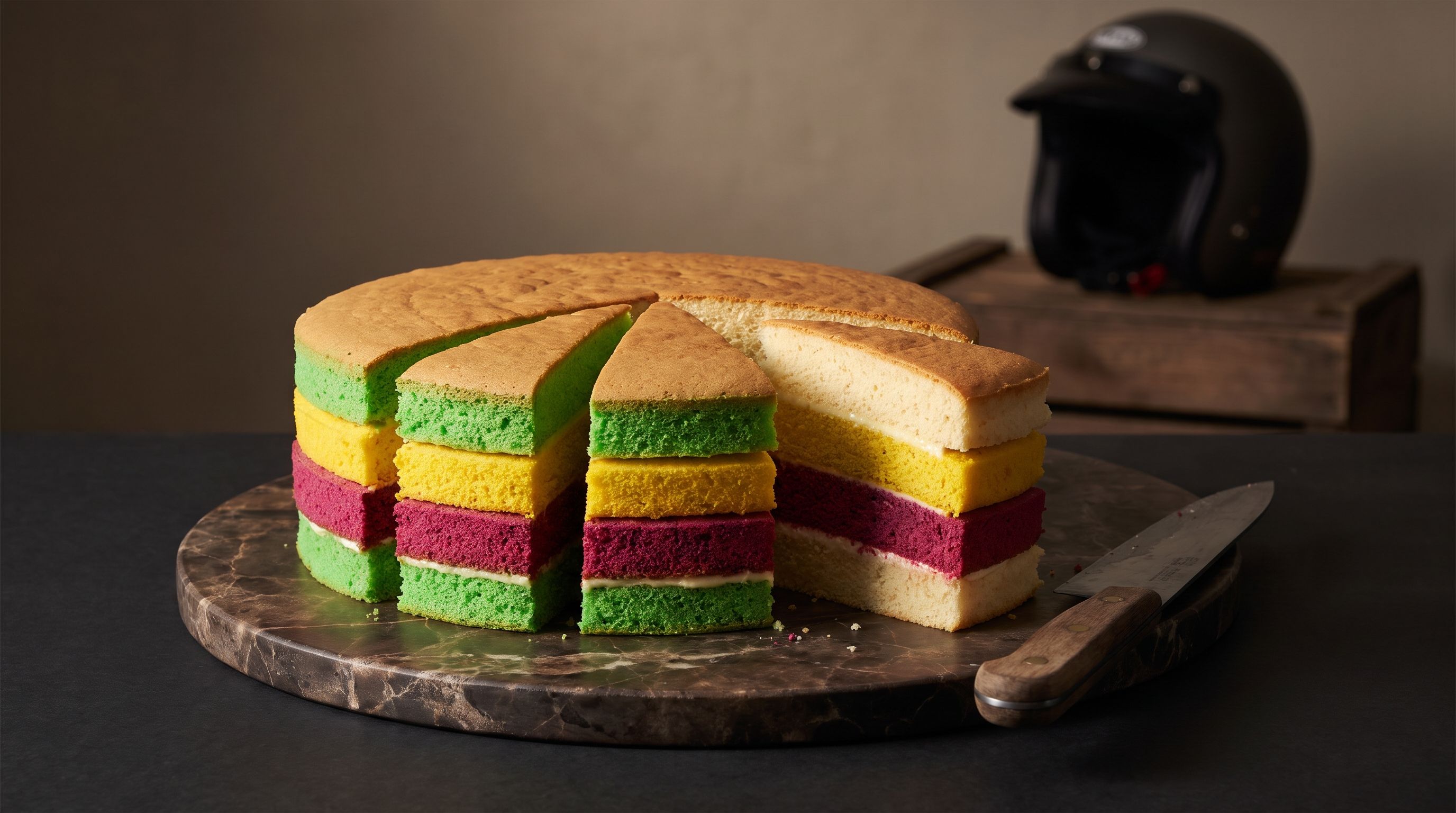
Since July, a picture of Uber cutting into a Delivery Hero "cake" has been doing the rounds. In Türkiye, it is usually shared with a caption saying Uber now owns Trendyol Go, Getir and Yemeksepeti. That caption is wrong, and the reason it is wrong matters more than the headline.
Uber does control Trendyol Go and Getir's delivery business. Yemeksepeti, however, is one of 14 markets that Delivery Hero agreed to sell to a New York investment firm, SSW Partners, so that Uber's takeover could get past competition authorities. Uber was able to buy the number two and number three apps in Türkiye. It structured its biggest deal so that it would not end up owning the number one as well.
This piece sets out what has actually changed hands, why Yemeksepeti was carved out, which questions the Rekabet Kurumu (Turkish Competition Authority) still has to answer, and what restaurants, which have complained about platform fees for years, should do while the market settles.
What changed hands, in order
| Date | Event | What it means in Türkiye |
|---|---|---|
| May 2025 | Rekabet Kurulu (the Competition Board) clears Uber's purchase of 85% of Trendyol Go for about $700m. Trendyol keeps 15%. | Uber enters Turkish food and grocery delivery as the owner of a leading platform. The app later moves to the Uber Eats brand. |
| Feb 2026 | Uber agrees to buy Getir's food and grocery delivery business from Mubadala, reported at about $335m for the delivery business. | Getir and Trendyol Go are to be combined under one owner. |
| 19 Jun 2026 | The Board clears the Getir deal subject to commitments. The only commitment reported so far is a $500m investment in Türkiye. | Two of the three large food delivery apps now have the same owner. |
| 16 Jul 2026 | Uber agrees to take over Delivery Hero at €41.50 a share, up from a €33 approach in May. The fully diluted equity value is €13.0bn, about $14.8bn. | Delivery Hero has owned Yemeksepeti since it paid $589m for it in 2015. |
| 16 Jul 2026 | In a parallel agreement, Delivery Hero will sell its businesses in 14 markets to SSW Partners for about $1.6bn. That sale only goes ahead if Uber's offer closes. | Yemeksepeti goes to SSW, not to Uber. |
| Expected H2 2027 | Closing, after merger clearances in many jurisdictions. | Until then, Yemeksepeti stays under Delivery Hero and is run separately from Uber. |
After the deal, Uber and Delivery Hero together would operate in 99 markets, with pro-forma gross bookings of $236bn for 2025. The 50 markets Uber is taking over directly, including talabat in the Gulf, Egypt, Jordan and Iraq, produced $42bn in gross bookings in 2025. The 14 markets going to SSW are foodora in Austria, Czechia, Norway and Sweden, efood in Greece, Foody in Cyprus, Glovo in Moldova, Poland, Portugal, Romania and Spain, PedidosYa in Chile and Ecuador, and Yemeksepeti in Türkiye. In nearly all of them, Uber Eats and Delivery Hero already compete with each other.
Why Yemeksepeti had to be left out
Under Article 7 of Law No. 4054, the Board can block a merger that would significantly impede effective competition. In Türkiye, the parties to that test would have been easy to see. A column in Ekonomim estimates that Yemeksepeti, Trendyol Go and Getir together have about 90% of online food delivery, with Yemeksepeti on its own at somewhere between 34% and 42% depending on the source. Neither the Board nor the companies have published shares, so these figures should be read as press estimates. The direction is still clear: if all three were combined, it would be hard to argue there was a credible rival left.
Taking Yemeksepeti out before any authority asked shows that Uber treated regulatory risk as part of the price. There is a cost to getting this wrong. Uber owes Delivery Hero a reported €700m break fee if regulators block the deal, and in 2025 Uber had already walked away from buying foodpanda Taiwan when the Taiwanese competition authority refused to approve it.
The Board's own 2026 reasoning is the key to what comes next
The most useful document for understanding the market after the merger is not about Uber. In March 2024, the Board opened an investigation (decision 24-12/211-M) into claims that Yemeksepeti forced restaurants to use its own courier service and made life harder for member restaurants, under Articles 4 and 6 of Law No. 4054. The reasoned decision was published in February 2026. The Board found no infringement and imposed no fine.
How the Board reached that conclusion matters more than the outcome:
- Yemeksepeti was found not to be dominant. It had once been close to a monopoly, but its share fell steadily as Trendyol Yemek and Getir Yemek grew. On some measures, such as the number of contracted restaurants using platform couriers, Trendyol Yemek had already moved ahead.
- Restaurants use several platforms at once (multi-homing). They sell in meaningful volumes on Getir Yemek, Trendyol Yemek and Migros Yemek, and independent couriers do not work exclusively for one platform.
- Restaurants could credibly leave. In the Authority's survey, restaurants said they could stop working with Yemeksepeti if its commissions went up. The Board read this as bargaining power and used it as evidence against dominance.
Each of these arguments assumes that a restaurant unhappy with one platform has several others of similar size to move to. After the Getir deal, a restaurant that leaves Yemeksepeti does not spread its orders across two independent rivals. It moves them to one company that owns both. The Board did not consider Uber's purchases in that decision, so the next time a dominance question comes up, the analysis starts from a different market structure.
Our reading is that the risk for the Board has moved from merger control to conduct. Merger review is largely over: Trendyol Go and Getir have been cleared, and Yemeksepeti has been placed outside Uber's reach. What is left is ongoing oversight of how a market with two main platforms behaves: commission levels, whether courier services are bundled with listing, campaign participation and parity clauses.
Three open questions for the regulator
1. Will SSW be an independent owner or a placeholder?
SSW Partners presents itself as an interim owner that will look for long-term buyers for each market. Trade press describes it as a small firm, with around five staff and about $646m in assets under management. Uber's own investor presentation says Uber will lend SSW most of the purchase price, which SSW repays over time, including from any later sale. A third party has already raised this with the European Commission, and the Commission is reported to be considering whether to review the two transactions together.
For Türkiye, the issue is simple. A divestment protects competition only if the buyer has both the incentive and the money to compete hard. A buyer that is financed by its main rival and plans to resell will tend to protect margins and manage the business for sale, not fight on price. Transferring control of Yemeksepeti will very likely need its own clearance in Türkiye. That review is where the Board can look at funding terms and at who the eventual buyer will be.
2. What did Uber promise for Getir, and does it hold up after the merger?
So far, only the $500m investment commitment is public. The reasoned decision on the Getir case, which has not yet been published, should show whether the Board asked for behavioural remedies such as courier unbundling, limits on exclusivity or commission transparency. If it only took an investment commitment, it was effectively relying on Yemeksepeti to keep the market competitive. That makes question 1 more important.
3. Is Migros Yemek a real third option?
The 2026 decision noted that Migros Yemek had increased its share. If it grows into a credible third platform, restaurants keep a real alternative. If it stays a small niche, the market is effectively split between two players: Uber Eats and whoever ends up owning Yemeksepeti.
What this means for restaurants
Restaurants have a strong case on fees. In the Yemeksepeti investigation, complainants said mandatory courier service cost new members 32% + VAT, compared with 12% + VAT for older members. The Board treated these as allegations, not findings, but they show how sharp the gap felt in practice. The government has already acted on this. Ticaret Bakanlığı (the Ministry of Trade) issued rules requiring platforms to show commission, advertising, courier and campaign fees as separate items. The rules also say restaurants cannot be forced into campaigns or discounts, commission is calculated on the product price unless the restaurant itself gives a discount, and add-on services need the restaurant's consent, which it can withdraw. Platforms had until 1 April 2026 to comply.
The fee-transparency rule and competition law cover different ground. The rule makes fees visible. Competition law decides whether a fee level or a bundle is an abuse, and that depends on market power. Market power is exactly what the consolidation changes.
Practical steps for a restaurant or a food brand:
- Calculate your real take rate for each platform every month. Add commission, courier fee, advertising, campaign contributions and payment costs, then divide by net order value. The transparency rule makes this possible, so use it. A rising take rate on both Uber-owned apps at once is the kind of evidence a complaint needs.
- Keep using more than one platform, and record why. The Board judged restaurants' bargaining power partly from what they said in its survey. If moving away from a platform is no longer realistic for you, document that, with figures.
- Build an ordering channel you own. Direct ordering on your website or app, WhatsApp ordering for regular customers, and a loyalty mechanism that rewards ordering direct all lower your dependence on platforms. Aim to reduce dependence. Leaving the platforms completely is not realistic for most restaurants.
- Know where each complaint goes. A fee shown incorrectly, or being pushed into a campaign, is a matter for the Ministry of Trade under the transparency rule. Bundling, discrimination between restaurants or exclusivity demands by a platform with market power are matters for the Rekabet Kurumu.
What to watch in 2027
- Publication of the Board's reasoned decision on the Getir deal and its commitments.
- The Turkish filing for the transfer of control over Yemeksepeti, and its financing terms.
- Whether the European Commission reviews the Uber and SSW transactions together, and any remedies it sets that could also affect Türkiye.
- Who SSW eventually sells Yemeksepeti to.
- Commission and courier fee trends on Uber Eats (the former Trendyol Go and Getir) after the two apps are integrated.
The bottom line
Türkiye has not ended up with a single food delivery company. It has ended up with two: Uber's combined business and a Yemeksepeti owned by an investment firm that depends on Uber's financing. Whether that is enough competition depends on regulatory decisions still to be made, and on whether restaurants collect the evidence those decisions will need.
Switas helps restaurant groups, food brands and marketplaces measure their channel economics and build direct-ordering growth that reduces platform dependence. See our growth management work.
FAQ
Does Uber own Yemeksepeti?
No. Yemeksepeti is one of 14 Delivery Hero markets being sold to SSW Partners. That sale depends on Uber's takeover of Delivery Hero closing, and Uber will not control the businesses being transferred.
Which food delivery apps does Uber own in Türkiye?
It owns 85% of Trendyol Go (approved in May 2025) and Getir's food and grocery delivery business (approved on 19 June 2026). Both are being brought together under Uber Eats.
When does the Delivery Hero deal close?
Closing is expected in the second half of 2027, after clearances in many jurisdictions.
Has the Competition Authority found that Yemeksepeti overcharged restaurants?
No. Its 2026 decision found no infringement and concluded that Yemeksepeti was not dominant, in part because restaurants could switch to rival platforms.
Can a platform force my restaurant into a discount campaign?
Under the Ministry of Trade's transparency rules, which applied from 1 April 2026, no. Campaign participation and add-on services depend on the restaurant's consent, and that consent can be withdrawn.
Sources
- Webrazzi: Board clears Uber's Trendyol Go purchase (May 2025)
- Webrazzi: Board clears Uber–Getir with commitments (19 Jun 2026)
- CNBC-e: Uber's Getir filing (Mar 2026)
- BusinessDay: Uber–Delivery Hero deal and the 14 SSW markets
- The Next Web: €41.50 offer, SSW conditionality and Uber's financing
- Trending Topics: European Commission scrutiny, SSW profile and break fee
- Medyascope: expected closing in H2 2027
- Ekonomim: "Uber, Yemeksepeti'ni neden almadı?" (market share estimates)
- CNBC-e: reasoned decision in the Yemeksepeti courier investigation (Feb 2026)
- Bloomberg HT: Ministry of Trade transparency rules for food delivery platforms
- Medyascope: Uber's foodpanda Taiwan deal blocked