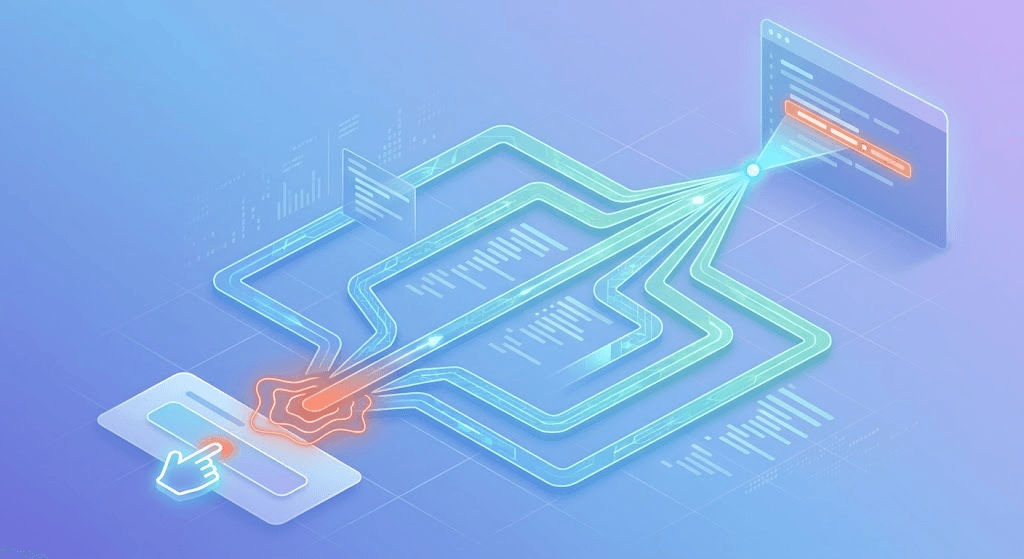

Agentic AI & The LLM Explosion: 5 Breakthroughs You Missed This March
The month of March 2026 has witnessed an unprecedented acceleration in AI development, characterized by massive leaps in large language model (LLM) performance, architectural efficiency, and the undeniable emergence of Agentic AI. The pace of new model releases has been staggering, with some industry analysts tracking a major release approximately every 72 hours. From compact powerhouses capable of outperforming models ten times their size to enterprise-grade multimodal systems that process massive contexts natively, the AI landscape is shifting beneath our feet.
For business leaders, developers, and technology enthusiasts alike, the "Model Release Velocity Crisis" has made it incredibly difficult to stay abreast of developments. However, beneath the noise of continuous product announcements, several profound, structural trends are redefining the economics of intelligence and the future of automated workflows.
This article cuts through the hype to explore the five most critical AI breakthroughs and trends defining March 2026, and how they are actively reshaping enterprise operations, software development, and the human experience of work.
1. The Definitive Rise of Agentic AI and Autonomous Operations
The most transformative trend of early 2026 is the rapid transition from generative AI to Agentic AI. While traditional LLMs excel at generating text, code, and imagery based on explicit human prompts, Agentic AI systems are designed for autonomy. They do not simply answer questions; they understand overarching objectives, formulate strategic plans, decompose those plans into actionable steps, and independently utilize various digital tools (such as CRMs, ERPs, email clients, and web browsers) to execute complex tasks.
Gartner and other prominent research institutions now predict that by the end of 2026, a remarkable 40% of enterprise applications will incorporate task-specific AI agents. This represents a staggering leap from adoption rates just a year prior. These autonomous agents function as highly capable digital coworkers, tirelessly managing email triage, orchestrating supply chain logistics, and conducting complex financial forecasting with minimal human oversight.
The economic implications are profound. Companies are aggressively deploying agentic systems to automate not merely repetitive tasks, but end-to-end business workflows. This structural shift allows organizations to significantly scale their operational capacity without linear increases in headcount. Imagine an AI agent that monitors real-time inventory levels, predicts a localized supply shortage based on emerging market trends, automatically solicits quotes from secondary suppliers, evaluates the responses for cost-efficiency, and drafts a purchase order for final human authorization. This level of autonomy fundamentally reduces operational friction and accelerates business velocity.
2. Unprecedented Context Windows and Cognitive Density
March 2026 has seen a decisive shift in LLM architecture. While raw parameter counts continue to grow, the primary focus for leading AI research labs has shifted toward maximizing "cognitive density" and expanding context windows to unprecedented lengths.
Models like OpenAI's recently released GPT-5.4 and Claude's latest iterations are pushing the boundaries of what is commercially possible, offering context windows exceeding 1 million tokens. This massive context capacity fundamentally alters how enterprises interact with data. Instead of relying on complex Retrieval-Augmented Generation (RAG) pipelines to feed small snippets of information to an AI, organizations can now upload entire codebases, years of financial records, or extensive legal libraries directly into the model's working memory in a single prompt.
Simultaneously, "cognitive density"—the amount of reasoning capability packed into a given parameter size—has skyrocketed. Compact models, such as the latest iterations from the Qwen series, are demonstrating graduate-level reasoning capabilities that rival or exceed those of massive legacy models from just 18 months ago. These smaller, highly efficient models can be run locally on consumer hardware or deployed cost-effectively at the edge, democratizing access to high-tier intelligence and enabling powerful, privacy-preserving local applications.
3. The Maturation of Physical AI and Robotics Integration
The digital realm is no longer the sole domain of artificial intelligence. March 2026 marks a clear inflection point in the maturation of "Physical AI"—the integration of advanced foundational models with robotic hardware.
The robotics sector is moving rapidly from tightly controlled research environments to real-world deployment. Companies like Boston Dynamics and Tesla are scaling their humanoid robot initiatives, but the true breakthrough lies in the software. By integrating specialized LLMs and multimodal vision-language models (VLMs) into robotic control systems, machines are now capable of zero-shot learning in the physical world.
Instead of requiring thousands of hours of specialized programming for a specific factory task, an engineer can simply instruct a robotic system in natural language: "Identify the defective components on the assembly line and place them in the red bin." The onboard AI processes the auditory command, utilizes its vision system to identify the components and the bin, plans the complex spatial movements required, and executes the task autonomously.
This convergence of software intelligence and physical actuation is poised to revolutionize manufacturing, logistics, healthcare, and eventually, domestic assistance. The "embodiment" of AI models represents a monumental leap in the technology's potential to interact with and shape the physical environment.
4. Hyper-Realistic Multimodal Generation in Real-Time
The boundaries between text, audio, image, and video generation have largely dissolved. The most significant releases this month, including the formidable LTX 2.3 and Helios, are true multimodal systems capable of generating high-fidelity, synchronized media at astonishing speeds.
We are witnessing the democratization of native 4K video generation. Models can now process a single text prompt and output 60 seconds of photorealistic video, complete with spatially accurate, synchronized audio, in near real-time. The computational efficiency of these diffusion transformer models has improved exponentially; tasks that required massive server farms a year ago can now be executed on a single high-end GPU.
For the creative industries, marketing, and education, the impact is seismic. Marketing teams can generate personalized, high-quality video advertisements tailored to specific demographics instantly. Educational platforms can dynamically generate immersive, 3D visual explanations of complex scientific concepts based on a student's individual learning pace. However, this hyper-realistic generation capability also accelerates the urgency for robust digital provenance and deepfake detection technologies, as the visual fidelity of AI-generated media is now functionally indistinguishable from reality.
5. Domain-Specific Expert Models and The New Economics of Intelligence
While generalized foundational models capture the headlines, the enterprise landscape is increasingly dominated by domain-specific "Expert Models." These are highly specialized LLMs trained meticulously on proprietary, industry-specific data—from complex medical literature and genomic sequences to nuanced legal precedents and proprietary financial algorithms.
In sectors like healthcare, these expert AI systems are revolutionizing diagnostics and drug discovery. AI models are accelerating the identification of viable molecular compounds, reducing the time and cost associated with early-stage pharmaceutical research by orders of magnitude. In the legal profession, specialized AI is automating the review of massive document troves during the discovery phase, instantly identifying critical clauses, liabilities, and precedents with a level of accuracy and speed unattainable by human paralegals.
This trend underscores a broader shift: the cost of intelligence is plummeting. As open-weight models become increasingly powerful and accessible, the competitive advantage is no longer determined by who possesses the largest general model, but by who has the highest quality proprietary data to train highly efficient, domain-specific AI. Enterprises are recognizing that fine-tuning smaller, targeted models yields superior performance for specific business functions at a fraction of the inference cost of massive, generalized models.
Conclusion: Adapting to the Velocity of AI
The breakthroughs of March 2026 clearly demonstrate that we have entered a phase of exponential, compounding technological advancement. For business leaders and professionals, passive observation is no longer a viable strategy.
Adapting to this new reality requires a proactive, strategic approach. Organizations must urgently conduct process audits to identify workflows ripe for Agentic AI automation. They must establish robust AI governance frameworks to mitigate security risks and ensure ethical deployment. Most importantly, they must prioritize the continuous reskilling of their workforce, focusing on AI collaboration and critical evaluation.
The convergence of autonomous agents, massive context windows, physical robotics, real-time multimodality, and domain-specific expertise is fundamentally rewriting the rules of the global economy. The future belongs to those who actively integrate these tools to augment human potential, streamline operations, and pioneer entirely new paradigms of innovation.